Microwave-Safe Plastic Food Containers
Plastic containers have become an essential part of storing and reheating food in the microwave, especially with today’s fast-paced lifestyle. They provide a practical way to prepare meals in advance and reheat them easily when needed.
But the important question is: Are all plastic containers safe for microwave use?
The truth is that some plastics cannot withstand high heat and may release harmful substances that affect both food quality and human health. On the other hand, microwave-safe containers are usually made from safe materials like polypropylene and are marked with a special symbol.
In this article, we’ll explore the types of plastics used, the best container sizes for daily meals, the importance of choosing BPA-free containers, as well as common mistakes people make when using plastic in the microwave and how to properly care for them.
Types of Plastics and Which Are Best for Microwave Use
Plastic containers differ depending on the material they’re made from. The best plastics for microwave use are Polypropylene (PP) and High-Density Polyethylene (HDPE), identified by the recycling numbers 5 and 2 inside the triangle symbol. Plastics marked with numbers 1, 3, 6, and 7 should be avoided, especially with hot foods. Always ensure the containers are labeled as microwave safe to guarantee food safety and avoid chemical leaching.
Safe plastics for microwave use include:
1. Microwave-Safe Plastic Food Containers (PP)
Identified by the recycling code “5,” PP is considered the best plastic for microwave use. It is heat-resistant and does not release harmful chemicals when heated.
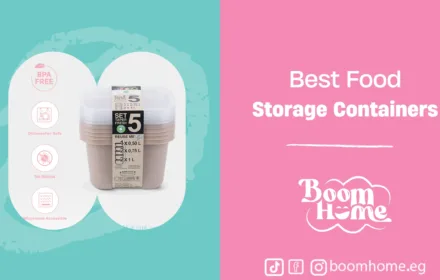
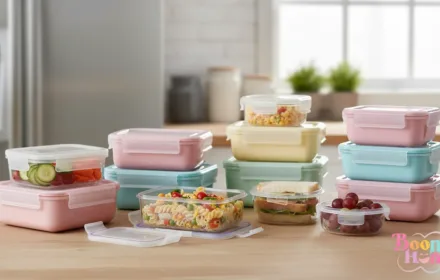
At Boom Home, we offer a variety of polypropylene containers in different sizes and designs, perfect for daily use — whether for office meals, school lunches, or fridge storage. Importantly, they are reusable and dishwasher-safe, making them a practical and healthy long-term choice.
2. High-Density Polyethylene (HDPE)
Marked with recycling code “2,” HDPE is also safe for hot foods and is one of the most widely used plastics for food storage containers. It is shock-resistant, freezer-friendly, BPA-free, lightweight, and easy to clean.
3. Microwave-Safe Plastic Food Containers (PETE/PET)
Marked with recycling code “1,” PET is not recommended for microwave use because it is not sufficiently heat-resistant. It is mainly used for cold food storage.
Plastics to Avoid in the Microwave
- Polyvinyl Chloride (PVC):
Marked with recycling code “3,” PVC is used in pipes, wires, and cheap plastic items, but it is not suitable for food contact, especially with heat. Lightweight plastic cups, dishes, and foam containers often fall into this category.
Can Plastic Lids Be Used in the Microwave?
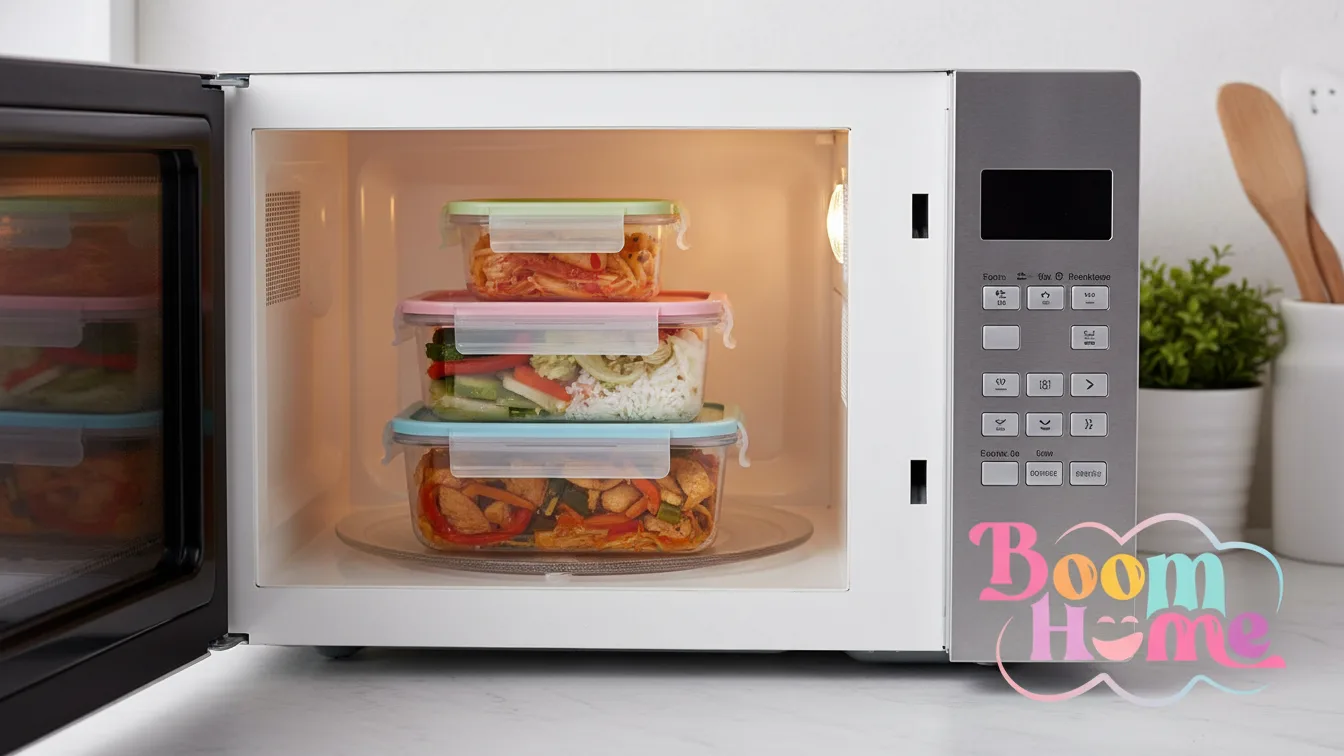
Many people place containers in the microwave with the lid tightly closed. However, the correct way is to ensure a small vent for steam to escape. This prevents the container from swelling or breaking and ensures safe heating.
Boom Home plastic containers are specially designed for maximum safety. It is always recommended to lift or loosen the lid before microwaving, allowing steam to escape naturally while keeping both the food and the container in good condition.
Best Capacities for Daily Meals
Choosing the right container size helps organize daily meals and avoid food waste. Different people have different needs — from children to office workers or even those following diet plans. For example:
- Small containers (300–750 ml): Ideal for snacks like fruits, nuts, or side salads.
- Medium containers (1300–2200 ml): Perfect for main meals at work or school, allowing a balanced portion of protein, carbs, and vegetables.
- Large containers (4500 ml): Suitable for full family meals, trips, picnics, or storing cooked food to reheat later.
- Multi-compartment containers: Great for those who prefer separating ingredients (e.g., rice from salad or protein). However, the downside is that the compartments are smaller and may not hold full portions.
By choosing the right capacity, you can control meal sizes, support a balanced diet, and make daily food prep more convenient.
The Importance of Using BPA-Free Containers
BPA (Bisphenol-A) is a chemical used in some plastics. Studies have shown that frequent exposure, especially when heating food, can negatively impact health. BPA may leach into food and disrupt hormonal balance, leading to long-term health issues.
For this reason, the global trend is now toward using BPA-free containers, clearly labeled as such, to ensure safety and peace of mind.
Common Mistakes When Using Plastic Containers in the Microwave
- Using non-microwave-safe plastics: Not all plastics can withstand high heat. PVC (3) and Polystyrene (6) may release harmful chemicals when heated.
- Microwaving with the lid tightly sealed: A sealed lid traps steam, which can cause the container to swell, crack, or even burst
Boom Home offers specially designed vented lids that allow steam to escape while keeping heating safe and even.