
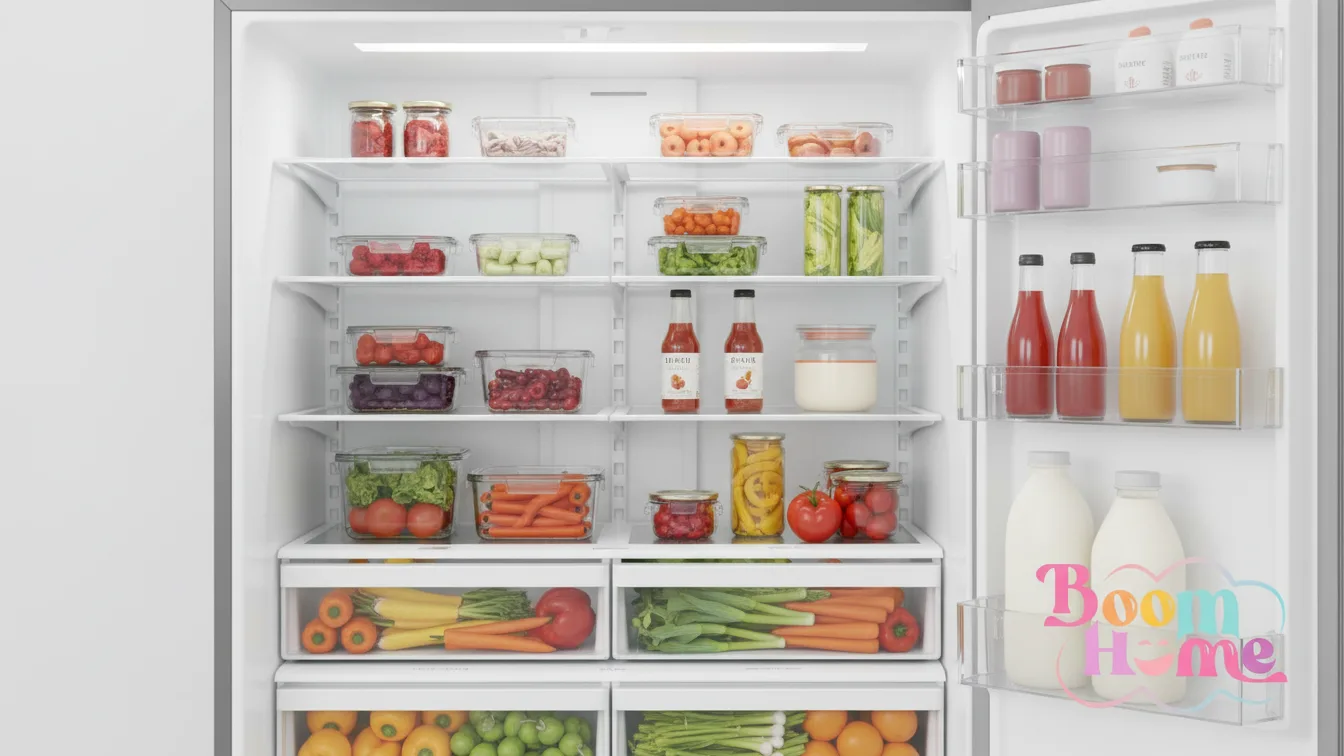
organize your fridge
The refrigerator is the beating heart of the kitchen, responsible for keeping foods fresh and healthy for as long as possible, but it is also one of the places most vulnerable to chaos if not organized in a smart way. How many times have you opened the refrigerator door and found yourself searching for a can of butter or a can of cheese for a long time? Or did you discover expired food because you forgot it in the back? The reason for this is often not lack of hygiene, but the absence of proper internal regulations. This is where organizations come in. They are practical tools that help you divide spaces, arrange ingredients in a way that saves time and effort, and maintains the quality of food. In this article, we will learn about the best ways to organize your refrigerator using organizers, and explain the most important tips and steps that will make your refrigerator clean, coordinated, and always easy to use.
best way to organize your fridge
Start emptying and cleaning Before you start using any organizers, the first step is always to empty the entire refrigerator and clean it well.
- Remove all food and drinks.
- Check expiration dates and dispose of any expired or invalid products.
- Wipe shelves and drawers with warm water with a little vinegar or sodium bicarbonate added to sterilize and remove odors. This step gives you a clear view of the refrigerator space and helps you determine the appropriate type of organization.
1. Arrange foods by temperature and location
Not every shelf in the refrigerator is suitable for every type of food, so it is important to know how to distribute foods scientifically:
- Top shelf: for prepared foods, dairy, and desserts.
- Middle shelf: For cooked meals or ingredients you will use soon.
- Bottom shelf: for raw meat and fish because it is the coldest area (it is preferable to store it in a tightly closed container to prevent contamination).
- Bottom drawers: intended for fruits and vegetables, and can be organized into organizations divided by type.
- Refrigerator door: For foods that can tolerate heat changes such as sauces, juices, and water, but not eggs or milk because they are more susceptible to heat fluctuations.
2. Use of labels and classifications
Small labels help you quickly know where each type of food is.
- Use removable labels to identify the contents of each box or box.
- Write the storage or expiration date to avoid forgetting old foods.
- You can divide the shelves according to use: “ready meals”, breakfast products, vegetables, sweets. So, the method makes everyone in the family know where everything is without clutter or repeated questions.
3. Arrange foods according to daily use
One of the best tricks to avoid clutter is to place the most commonly used foods in the front, while keeping the least commonly used foods in the back.
- Allocate a front organizer for breakfast products such as cheese, butter, and jam.
- Place juices and water at a level that is easy for children to reach.
- Keep cooking ingredients such as sauces and preserves in an area that is easy to see while preparing food.
Maintain good ventilation inside the refrigerator
Even with the use of regulators, small distances must be maintained between boxes and cans to ensure cool air circulation.
- Do not overfill the refrigerator.
- Use regulators with ventilation holes to avoid excess moisture.
- Make sure that the air vents inside the refrigerator are not blocked. This helps distribute cooling evenly and extends the life of foods.
Also you may like: Best Food Storage Containers for Long-Term Use (Pros & Cons).
Frequently asked questions for organizing the refrigerator with organizations
1. What is the best material for making refrigerator organizers?
BPA-free clear plastic is the best and most popular choice. It’s durable, lightweight, easy to clean, and most importantly, transparent, allowing you to see content clearly without having to take out the organizer. Reinforced glass regulators are also used for aesthetic reasons, but they are heavier and may be more susceptible to breakage.
2. Should vegetables and fruits be placed in plastic bags inside drawers?
It is not recommended to place most vegetables and fruits in airtight plastic bags inside drawers, especially those that require low humidity, as this may trap excess moisture and speed up their rot. It is best to use reusable mesh bags or wrap them in paper towels (such as parsley and coriander) to help absorb excess moisture.
3. Where should I put milk and eggs in the organized refrigerator?
Milk and eggs should be placed on one of the main shelves (usually the middle or top shelf) and not in the refrigerator door. These products require a constant, cool temperature, and the refrigerator door is the area most exposed to temperature fluctuations when opening and closing, which may reduce their shelf life.
4. What is the importance of rotating trays (Lazy Susan) in the refrigerator?
Rotary trays are a real lifesaver for deep refrigerator corners. Its importance lies in the fact that it facilitates access to small jars and bottles that are usually forgotten in the back. Instead of taking out five things to get to one, you can simply rotate the tray to find what you need, preventing products from being forgotten.
5. Are refrigerator shelves allowed to be covered with plastic or paper liners?
It is generally recommended to avoid covering all refrigerator shelves, especially if the shelves allow cold air to pass through. Coverage may impede proper circulation of cold air, affecting the cooling efficiency of the refrigerator. If you use liners to protect shelves from spills, make sure they do not cover more than 50% of the shelf area, preferably made of a breathable material.